
Introduction
Concrete is the backbone of modern civil engineering, but it is also highly porous. In regions like the UAE, where coastal proximity translates to high humidity and salt-laden groundwater, untreated concrete structures are highly vulnerable. Water ingress leads to steel reinforcement corrosion and structural compromise.
Understanding how different bitumen solutions behave at the molecular level is key to designing long-lasting moisture barriers.
Understanding Bitumen Priming: Low-Viscosity vs. High-Build Membranes
Waterproofing is never a single-step process. To create a flawless moisture barrier, engineers rely on a system of penetration and build:
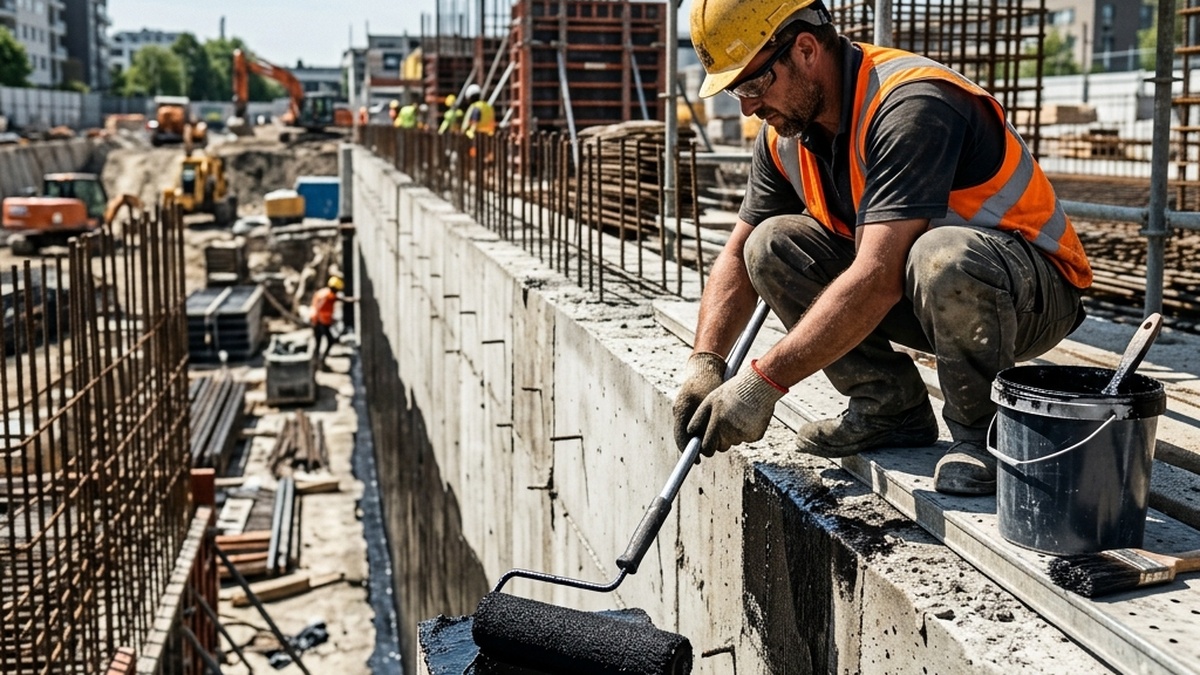
- Penetration (The Primer Stage): Using solutions like ACE Bitumen SB (a low-viscosity, high-penetration cold-applied bitumen), the liquid deeply penetrates concrete pores. This closes capillary tracts internally and provides a sticky, cohesive surface for subsequent layers.
- Flexible Membrane Building (The Build Stage): Applying a high-build layer such as ACE Bitumen RBE 15 (Rubber-Modified Bitumen Emulsion) forms a seamless, joint-free rubberized membrane. The rubber additives give the bitumen elasticity, enabling it to bridge micro-cracks that naturally occur as the building settles.
Practical Site Tips: Ensuring Flawless Cohesion
- Moisture Check: Ensure the concrete substrate is fully cured and free of surface water before applying solvent-based primers.
- Double Coat Application: Always apply RBE coatings in two perpendicular coats to eliminate pinholes.
- Detailing Corners: Reinforce expansion joints and 90-degree corners with a fiber mesh embedded between the bitumen layers.