Introduction
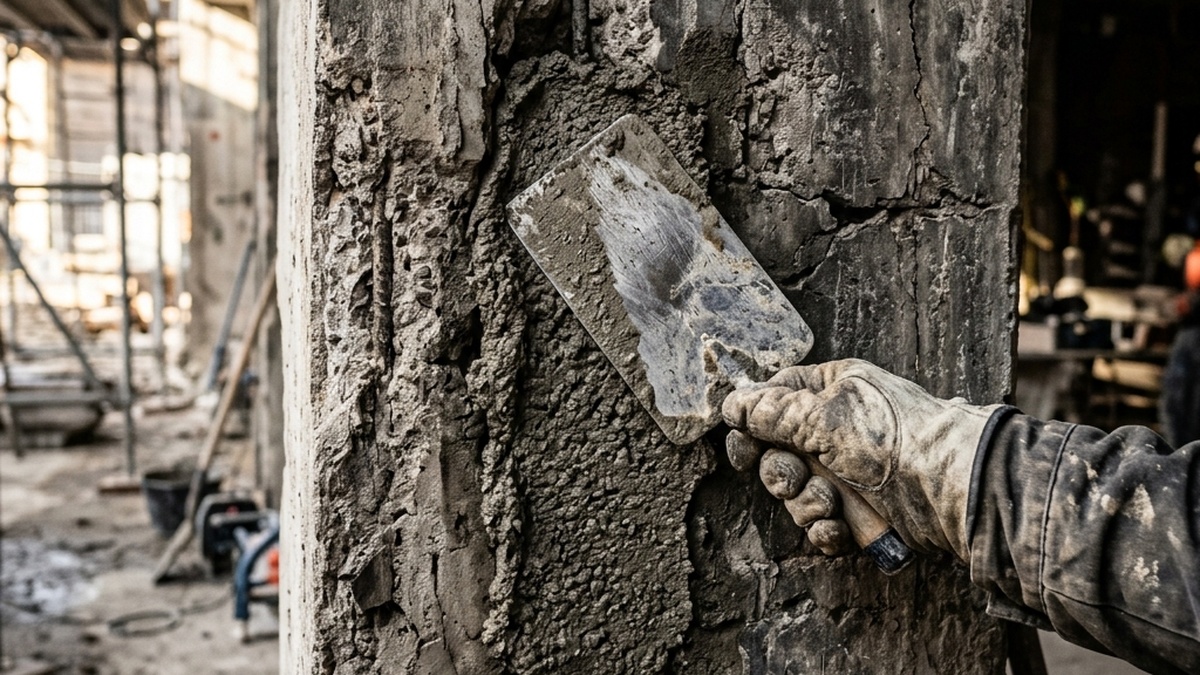
Concrete repair and plastering often fail due to poor adhesion between the old concrete substrate and the fresh mortar overlay. To solve this, contractors use liquid polymer admixtures. However, using the wrong chemical type can cause structural failures, especially in wet or humid conditions.
Let’s break down the technical differences between PVA (Polyvinyl Acetate) and SBR (Styrene-Butadiene Rubber) bonding agents.
PVA (Polyvinyl Acetate) Latex Emulsions
PVA-based agents like ACE Bond PVA are excellent, cost-effective surface sealers and bonding agents for indoor drywall, plastering, and dry masonry.
- How it works: PVA forms a film that re-emulsifies when contact is made with water.
- The Catch: Because PVA can re-emulsify when exposed to moisture, it should never be used for outdoor plastering, wet rooms (bathrooms), or structural screeds exposed to water.
SBR (Styrene-Butadiene Rubber) Co-Polymers
SBR agents like ACESBR Rubberize Bond D represent advanced polymer technology. SBR is highly water-resistant and does not re-emulsify once cured.
- How it works: SBR particles form a dense, cross-linked polymer network within the cement matrix, making the cured mortar hydrophobic.
- Best Used For: External renders, swimming pool coatings, wet area tiling, structural concrete repairs, and bonding fresh screeds to older slabs. SBR increases tensile, flexural, and adhesive strengths exponentially.